


Some road rules have tightened and others have expanded as the new financial year kicked off on Wednesday.
Road-related costs including the price of penalties will also be adjusted in some states, as indexation is applied and state government schemes come into effect on July 1.
Further changes are also looming, with registration changes and fines for the parents of young e-bike riders yet to be implemented.
Know the news with the 7NEWS app: Download today
Here is everything you need to know about the state-by-state changes.
New South Wales
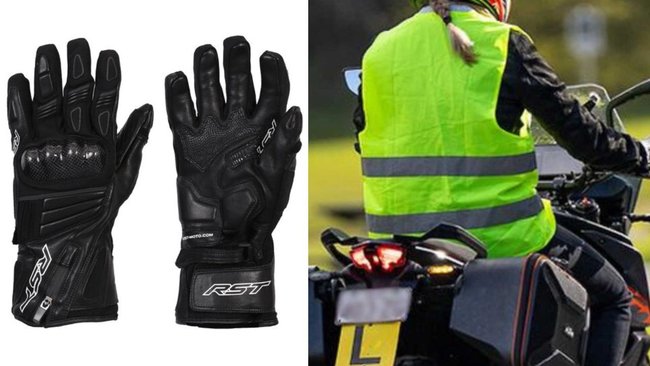
Motorcyclist garb is the focus of July 1 changes to road rules in New South Wales.
“Novice motorbike riders are set to face tougher requirements under changes to the Motorcycle Graduated Licensing Scheme,” the National Roads and Motorists’ Association (NRMA) said.
“Learner, P1, and P2 riders in the state must wear approved protective gloves at all times.”
Learner riders will also need to wear an approved high-vis vest or jacket under the new rules.

“We know gloves can almost halve the risk of hand and wrist injuries, and high-vis gear makes riders far easier for others to see,” Transport for NSW Secretary Josh Murray said.
The change will apply to thousands of young people, with 40 per cent of the 27,000 learner motorcycle licences issued each year going to people younger than 25.
“These reforms are just the first stage of a broader package of enhancements aimed at strengthening safety for new riders by improving protective gear use, visibility, and training,” Murray said.
Beyond July 1, further changes will also affect drivers in NSW.
The weekly $60 cap for road toll fees will be lowered to $50 for 12 months from from July 6. For the travel period starting on Monday, claims will open in October this year, Service NSW said.

Registration renewals will also be slashed in a one-off reduction to the annual motor vehicle tax, and will be applied to all vehicles with an effective renewal date sometime in the 12 months from September 2026.
A $100 discount will be applied to car registrations, and an $80 discount will apply to motorbike registrations.
Between September 1 and August 31, 2027, car owners will be charged $100 less on registration renewals and motorcycle owners will get $80 off. The discount will be automatic on all renewal notices.
Queensland
Electric bikes and scooters have been targeted in the July 1 changes in Queensland.
Police will be allowed to seize and destroy illegal e-bikes and e-scooters and enforce random breath tests on riders, who will be limited to a 0.05 blood alcohol limit.
E-scooters, e-skateboards or e-unicycles will only be able to ride on roads with speed limits 60km/h and lower, or in bike lanes.
All e-vehicles will be restricted to speeds of 25km/h on roads, and 12km/h on footpaths or when passing pedestrians on shared roads.
“Higher penalties will apply for speeding, failure to wear a helmet, careless riding, illegally carrying passengers and riding e-scooters, e-skateboards or e-unicycles on prohibited roads from July 1,” the NRMA said.
Looking ahead to more looming rules, e-bike riders will need to be 16 or older and hold a valid drivers licence, which includes a learners permit.
That rule comes into effect from August 31, and parents of offending youths will be fined if caught riding illegally.
“Some exemptions will apply, including medical conditions and disabilities and 12-17 year olds being allowed to ride under parental supervision,” the NRMA said.

Victoria
Victorian motorists who fail to pay infringement notices by the initial due date will face higher penalty fees under changes that took effect on July 1.
The reforms overhaul the state’s infringement enforcement system by increasing the cost of unpaid fines.
South Australia
South Australian motorists will pay more for speeding and drink driving offences from July 1 after annual penalty increases linked to the Consumer Price Index (CPI).
Fines for speeding have increased across every offence category:
- Less than 10km/h over limit: $215 (previously $208)
- 10–20km/h over: $484 (previously $469)
- 20–30km/h over: $998 (previously $995)
- 30–45km/h over: $1,793 (previously $1,736)
- 45km/h+ over: $2,018 (previously $1,954)
Drink driving penalties have also increased, with motorists returning a blood alcohol concentration below 0.08 facing a fine of $904, up from $875.
Western Australia
The WA government is considering enforcing a host of new laws for L-plate and P-plate drivers, following an extensive consultation period with the community.
Under the reforms, the minimum learner period doubles from six to 12 months, the provisional period stretches from two years to three, and the minimum supervised driving hours jump from 50 to 80 — including a doubling of required night hours from five to 10.

ACT and Tasmania
There are no noted changes to traffic laws or infringements in these states other than fine increases indexed to inflation.


